What AI is already doing for agriculture today - and how your role will change tomorrow
And how will that change the role of the grower and advisor soon?
Artificial intelligence (AI) is no longer something of later; it is happening now. In agriculture, the first concrete applications are becoming visible: from disease detection to crop optimization and automatic reporting. Yet AI also raises questions: how reliable is it? When does it really add something? And how do you make sure it fits within the grower's and advisor's practice?
In this final article of the knowledge series, we look at the role of AI in agriculture, now and soon.
From experience to pattern recognition
Many decisions in agriculture are based on experience. But AI makes it possible to systematically collect, recognize and apply that experience. Consider:
Predicting disease pressure based on weather and observation data
Generate advice based on similar growing conditions
Smart notifications when something deviates from the normal growth course
This does not replace craftsmanship, but complements it. AI can see patterns where humans can’t (anymore), for example due to the amount of data, pace or variation.
Examples to come
At AppsforAgri, we are working on several applications in which AI plays a supporting role. Think of:
Disease expectation within SmartFarm: AI algorithms combining future actual field data with historical information and crop stages to predict disease pressure even more accurately.
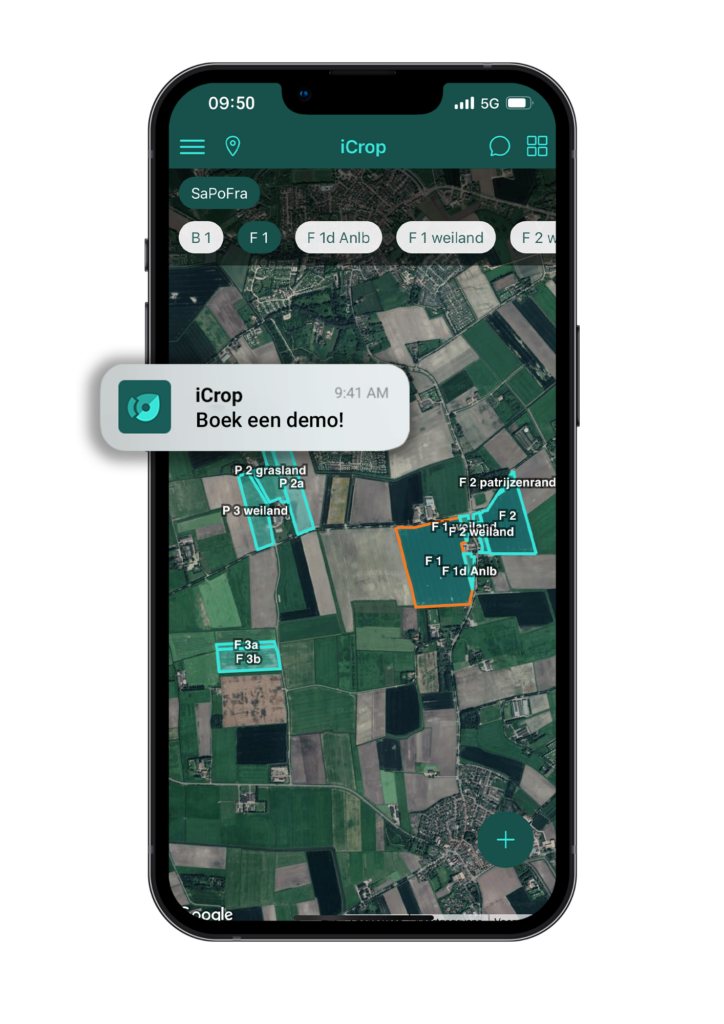
Observation recognition in iCrop: in time, the system will suggest treatments or points of interest based on previous records and the crop plan.
Automatic reporting: AI will soon be able to generate standard reports based on field data, pesticide use and crop progress.
The goal is not complete automation, but support that saves time, prevents errors and enables better choices.
Looking ahead: where are the opportunities?
The greatest promise of AI is in combining data sources: weather, soil, resources, crop history, observations. By linking this information together, systems can:
Even better warning of risks
Providing more personalized advice
Automatically adjust plans to circumstances
Smartly predicting how cultivation will develop
Value is also created at the chain level: AI can help improve traceability, quality assurance and reduce waste.
Conditions for success
AI only works if the basics are in order: good data, captured knowledge and cooperation between people and systems. Anyone who wants to apply AI must start with the basics: observe, structure and then automate. Well-organized data and collaboration are crucial and are at least as important a foundation as the technology itself.
Rounding out the series
Over the past few months, we have shown how growers, advisors and supply chain partners are working smarter together using digitization, field data and hands-on innovations.
From plot registration to BOS, from standardization to SmartFarm and AI: more efficient growing starts with insight and working together to improve.
Also in 2026, AppsforAgri continues to contribute to a strong, future-oriented agriculture. Together with the sector.
Would you like to get started with data-driven cultivation yourself, do you have questions about the applications in your situation, or would you like to explore together what digitization can do for your organization? Feel free to contact us, we are happy to think along with you.
Take the next step with AI in your cultivation strategy. Download our free white paper: